
The right woodworking machines depend on more than the size of your workshop. Your product range, daily workload, available floor space, operator skills, budget and future plans all influence which equipment makes sense. This guide explains how to assess your workshop, compare machine configurations and plan a practical woodworking setup before purchasing equipment.
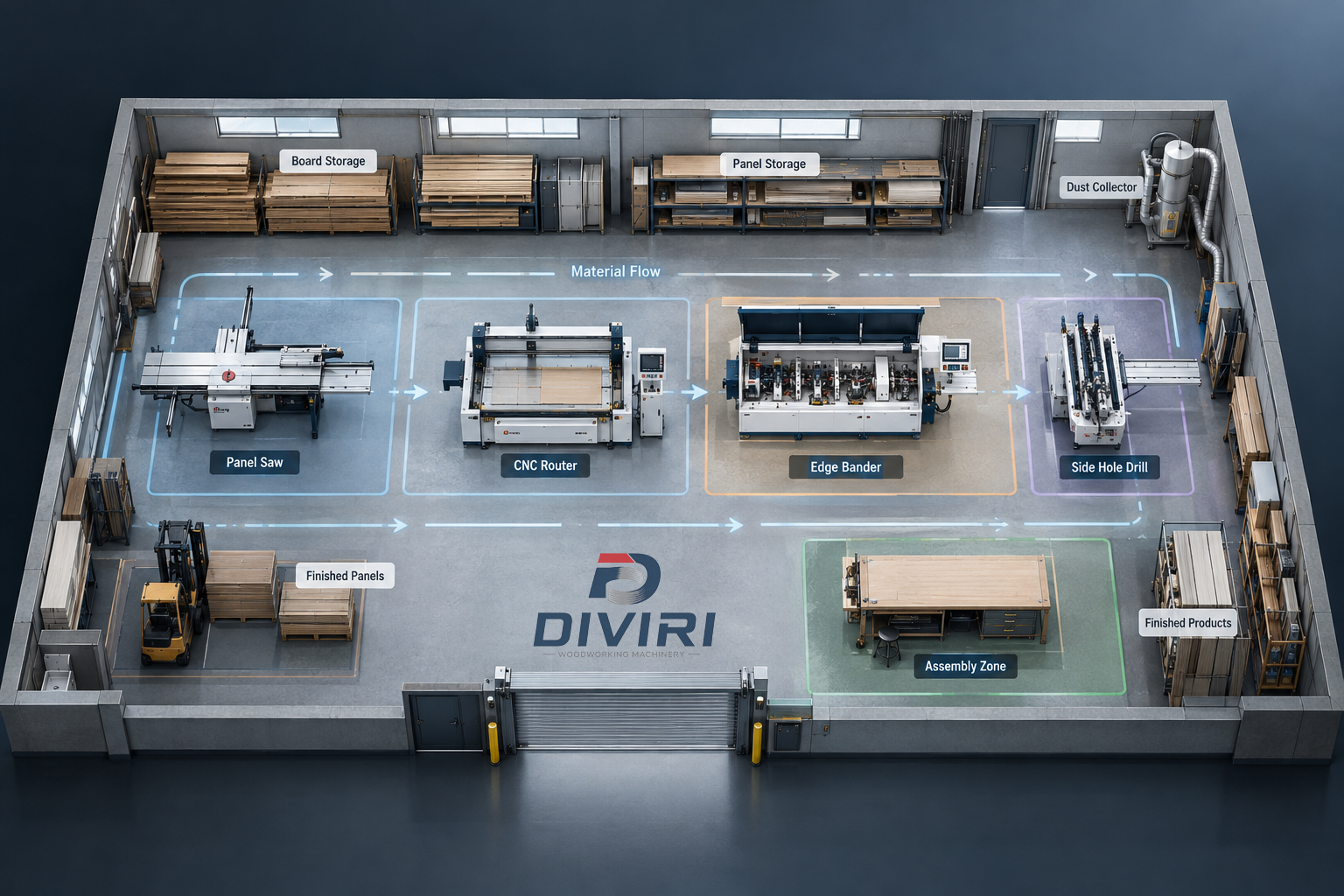
Floor space is one of the first constraints to evaluate, but the machine's footprint is only part of the calculation. A machine may fit physically inside a workshop while leaving insufficient room for loading panels, moving workpieces, operating safely or maintaining the equipment.
Before comparing machines, measure the available production area and identify:
The usable floor area after accounting for walls, columns, doors and existing equipment.
Material storage and finished-product storage areas.
Space required for loading and unloading workpieces.
Operator access, material movement and maintenance access.
Electrical, compressed-air, dust-extraction and other utility requirements specified by the machine supplier.
Important: Ask suppliers for the overall machine dimensions and the recommended installation and operating space. Do not assume that the published machine dimensions represent the total floor area required.
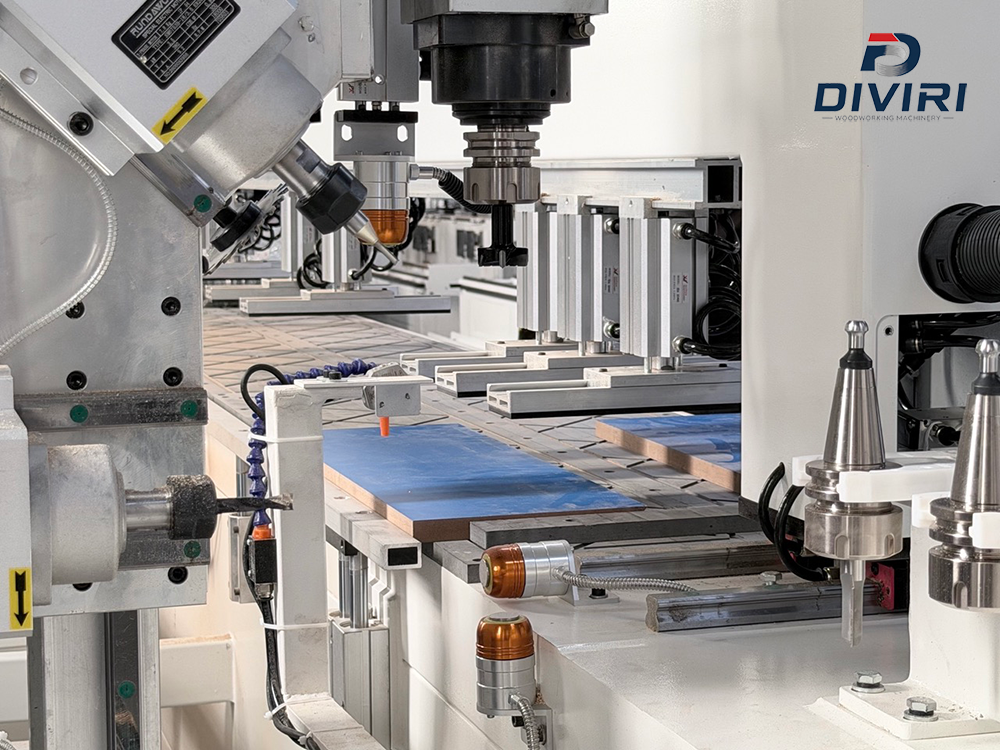
The best machine for a small workshop is the one that matches its actual production requirements. A workshop making custom wardrobes in small batches may need a different setup from a business producing standardized cabinet components every day.
Before choosing equipment, answer four questions.
List your main products, such as kitchen cabinets, wardrobes, office furniture, doors or custom panel furniture. Different products require different machining operations. Cabinet components may require repeated drilling patterns and edge finishing, while custom pieces may involve more varied dimensions or machining paths.
Identify the panel materials, thicknesses, dimensions and edge materials you commonly use. Confirm that the machine's working range and processing configuration are suitable for those materials. Ask for confirmation of the actual materials and workpiece dimensions supported by the proposed configuration.
Estimate your typical daily workload, the number of workpieces processed in each batch, and how frequently you change product designs. A machine optimized for repetitive production may not be the most practical choice for a workshop that changes its product specifications frequently.
Observe your existing workflow. Is cutting taking too long? Are drilling operations repeated manually? Does edge finishing require too much handling? Are workpieces waiting between processes? A clear understanding of the bottleneck helps you decide which machine should be purchased first.
A small furniture workshop does not always need every machine at the beginning. Start by identifying the essential operations and then compare possible equipment combinations.
A panel saw may be suitable when cutting sheet materials into components is a central operation. Compare the cutting capacity, panel dimensions, cutting requirements, available space and material-handling needs.
A CNC nesting machine can combine programmed panel cutting with other machining operations supported by its configuration. Tool changers, vacuum tables and automatic loading or unloading are configuration-dependent features. For a small workshop, the relevant question is not simply whether a CNC machine is more advanced. Consider which manual operations it would replace, whether your production can use its capabilities, and whether the additional equipment, software, tooling and operator requirements fit your business.
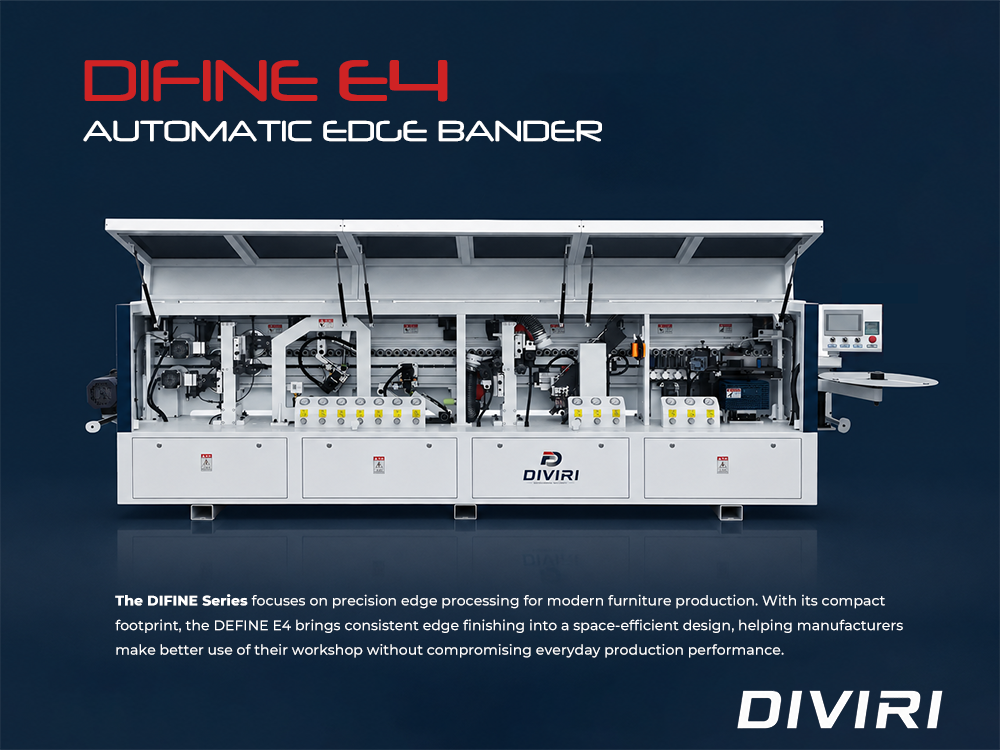
An edge banding machine applies edge material to panel edges and may include additional finishing functions depending on its configuration. When comparing machines, review the supported edge materials, panel dimensions, feeding method and available processing units. Options such as pre-milling, trimming, corner rounding and scraping should be confirmed for each specific model.
Panel furniture often requires holes for connectors, fittings, hinges and assembly. The suitable drilling solution depends on hole patterns, workpiece dimensions, batch size and how often the design changes. A hinge boring machine may suit a more specific drilling task. A row drilling machine can be worth evaluating for repeated hole patterns, while a CNC drilling or machining solution may be more appropriate when the required operations and workpiece layouts call for greater flexibility.
Price categories alone do not determine whether a machine is suitable. A lower-priced machine may be adequate for a limited operation, while a more automated machine may make sense when it addresses a recurring production constraint.
Use the following comparison as a framework rather than a fixed industry classification.
An entry-level setup may prioritize essential operations and straightforward operation. It can be worth considering when a workshop is establishing its production process, working with limited volumes or automating one operation at a time.
A mid-range setup may be appropriate when the workshop has a more consistent workload and needs additional processing functions or reduced manual handling. The key is to identify the specific benefits of the proposed configuration. For example, pre-milling on an edge bander or a tool changer on a CNC machine may be useful when the corresponding operations are part of the actual workflow.
Advanced configurations may integrate several operations, tooling systems or material-handling functions. They can be worth evaluating when the workshop has sufficient workload, floor space, utilities, operator capability and budget to support the system. More automation also introduces considerations such as programming, maintenance, tooling, commissioning and operator training. A more advanced machine is not automatically the best investment for every small workshop.
China is one possible sourcing market for woodworking machinery. However, country of origin alone does not determine whether a machine is suitable, reliable or economical for a particular workshop. The decision should be based on the actual machine, configuration, supplier capability, delivery terms and support arrangements.
Two machines described with similar names may differ in working range, tooling, processing units, control systems and standard accessories. Ask each supplier to confirm the specifications in writing. Where necessary, provide sample drawings or workpiece information so that the proposed configuration can be checked against your application.
A quotation should clearly distinguish standard equipment from optional features. Confirm the supplied accessories, electrical requirements, documentation, packaging and any installation or training services. If you are comparing quotations from different countries or suppliers, make sure the scope is comparable before judging the price difference.
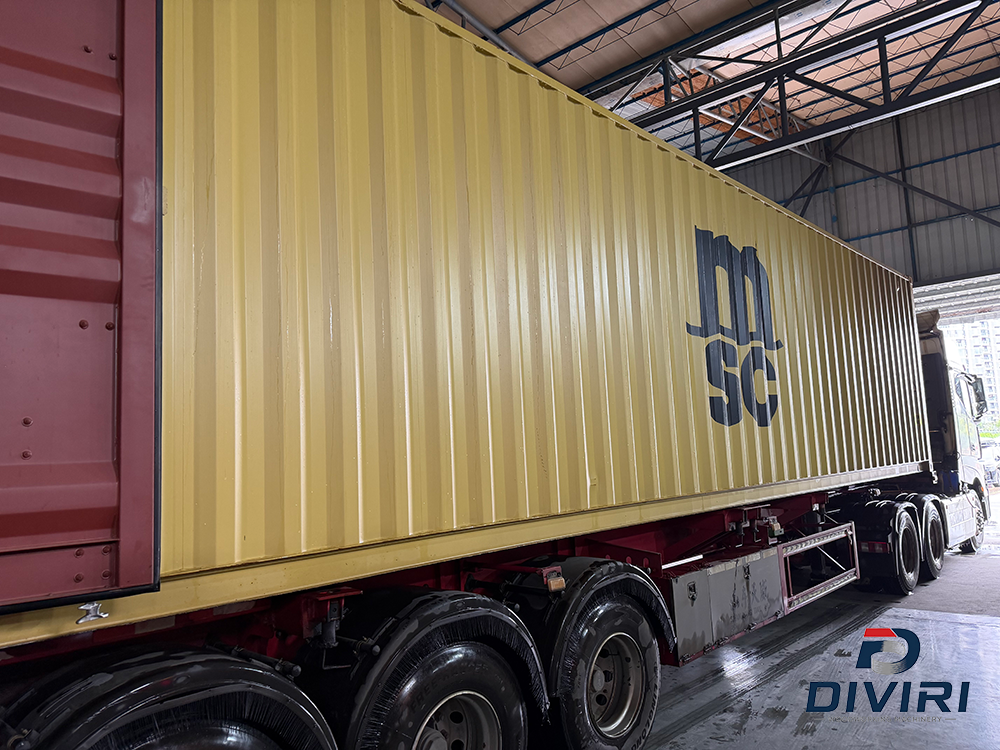
Before placing an order, discuss how the machine will be checked before shipment, what documentation will be supplied, how technical questions will be handled and what support is available after delivery. For overseas purchases, also clarify the shipping arrangement, export packaging, delivery terms and the responsibilities of each party.
For buyers who are unfamiliar with China's woodworking machinery market, coordinating multiple suppliers can require considerable time.
DIVIRI is a woodworking machinery sourcing and supply-chain coordination brand. We help international buyers explore equipment options, compare configurations and coordinate with selected manufacturers in China. The appropriate solution depends on the buyer's production needs. Our role is to help clarify those requirements and identify machinery options for further evaluation, rather than assume that one machine or supplier fits every workshop.
The goal is not to fill a workshop with the largest number of machines or the highest level of automation. It is to select equipment that supports your actual production process, fits your space and can be operated and maintained within your budget.
If you are planning a small furniture workshop or upgrading an existing setup, DIVIRI can help you explore woodworking machinery options from selected manufacturers across China. Contact DIVIRI and share your product type, available workshop space and main production requirements. We can help you identify suitable machine options for further evaluation.
